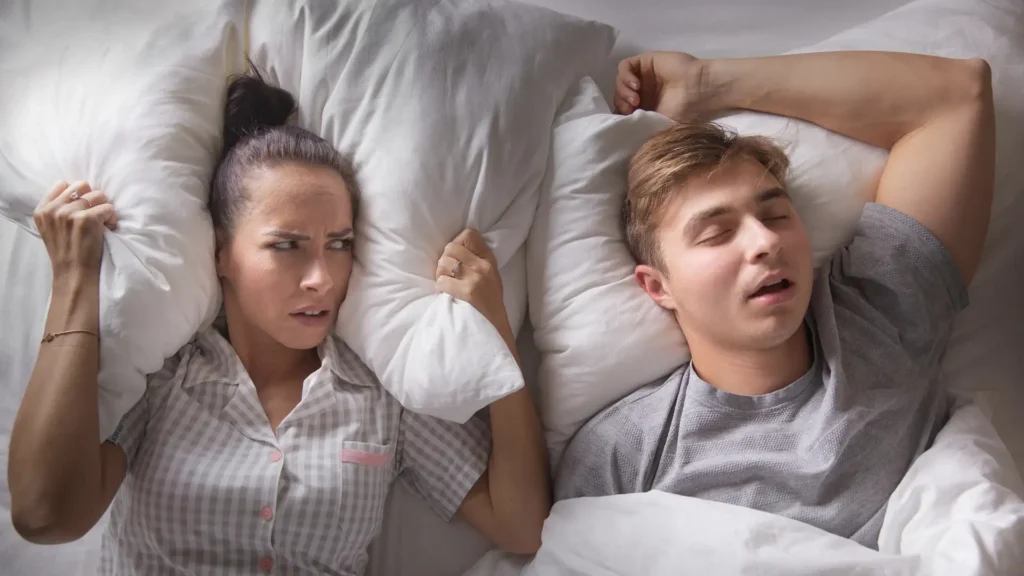
Snoring is the loud sound produced during breathing when the mouth and nasal airway become partially narrowed or blocked for various reasons. These sounds occur due to the contact between the back of the tongue, soft palate, and uvula during inhalation and exhalation. Snoring is not only a social nuisance but can also be a warning sign of a more serious condition called sleep apnea.
Table of Contents
ToggleWhat Is Sleep Apnea?
Sleep apnea is a condition where breathing temporarily stops during sleep, usually in advanced stages of snoring. It occurs when the back of the tongue, soft palate, and uvula collapse against each other, completely blocking the airway for more than 10 seconds. These episodes may repeat multiple times throughout the night, posing serious health risks.
Who Is Affected by Sleep Apnea?
Individuals with sleep apnea often experience the following symptoms:
-
Constant fatigue during the day
-
Weakness and exhaustion
-
Lack of concentration
-
Forgetfulness and mental fog
Causes of Sleep Apnea
-
Excessive alcohol and smoking
-
Being overweight (obesity)
-
High stress levels
-
Use of antidepressants and muscle relaxants
-
Genetic predisposition
How Are Sleep Apnea and Snoring Treated?
Various treatment methods are used for managing sleep apnea and snoring:
-
Surgical Intervention – Uvulopalatoplasty surgery performed by ENT specialists.
-
CPAP Device – A mask system that delivers pressurized air through the nose to keep the airway open during sleep.
-
Dental Snoring Appliances – Custom intraoral devices designed to reposition the lower jaw forward, maintaining airway patency.
How Are Snoring Appliances Applied?
Snoring appliances are custom-made based on impressions taken by a dentist. These devices are fitted onto both the upper and lower jaws and work by bringing the lower jaw forward to prevent airway narrowing. As a result, both snoring and sleep apnea episodes can be significantly reduced.